
Travel FAQ
The questions we actually get asked
Visas, vaccinations, vehicles, money and what to put in the bag.
Before you travel
Do I need a visa for Kenya?
Most visitors now apply for an Electronic Travel Authorisation online before departure rather than a visa on arrival. Apply at least three days ahead. Tanzania is separate and is not covered by the East Africa Tourist Visa, so a cross-border trip needs both.
What vaccinations do I need?
There are no compulsory vaccinations for entering Kenya directly from Europe or North America, but a yellow fever certificate is checked if you arrive from an endemic country and when crossing into Tanzania. Malaria prophylaxis is strongly recommended for the Mara, the coast and the low-lying parks. Talk to a travel clinic six to eight weeks before you fly.
Do I need travel insurance?
Yes, and we will not run a mountain trek without it. Make sure it covers medical evacuation, and for Kilimanjaro that it covers trekking to 6,000 m — many standard policies stop at 4,000 m.
How far ahead should I book?
For July to October, six months is not too early — the best-positioned camps in the Mara fill up. For other months, six to eight weeks is usually comfortable. We can often put something together in a week if you are flexible about lodges.
On safari
What is the vehicle like?
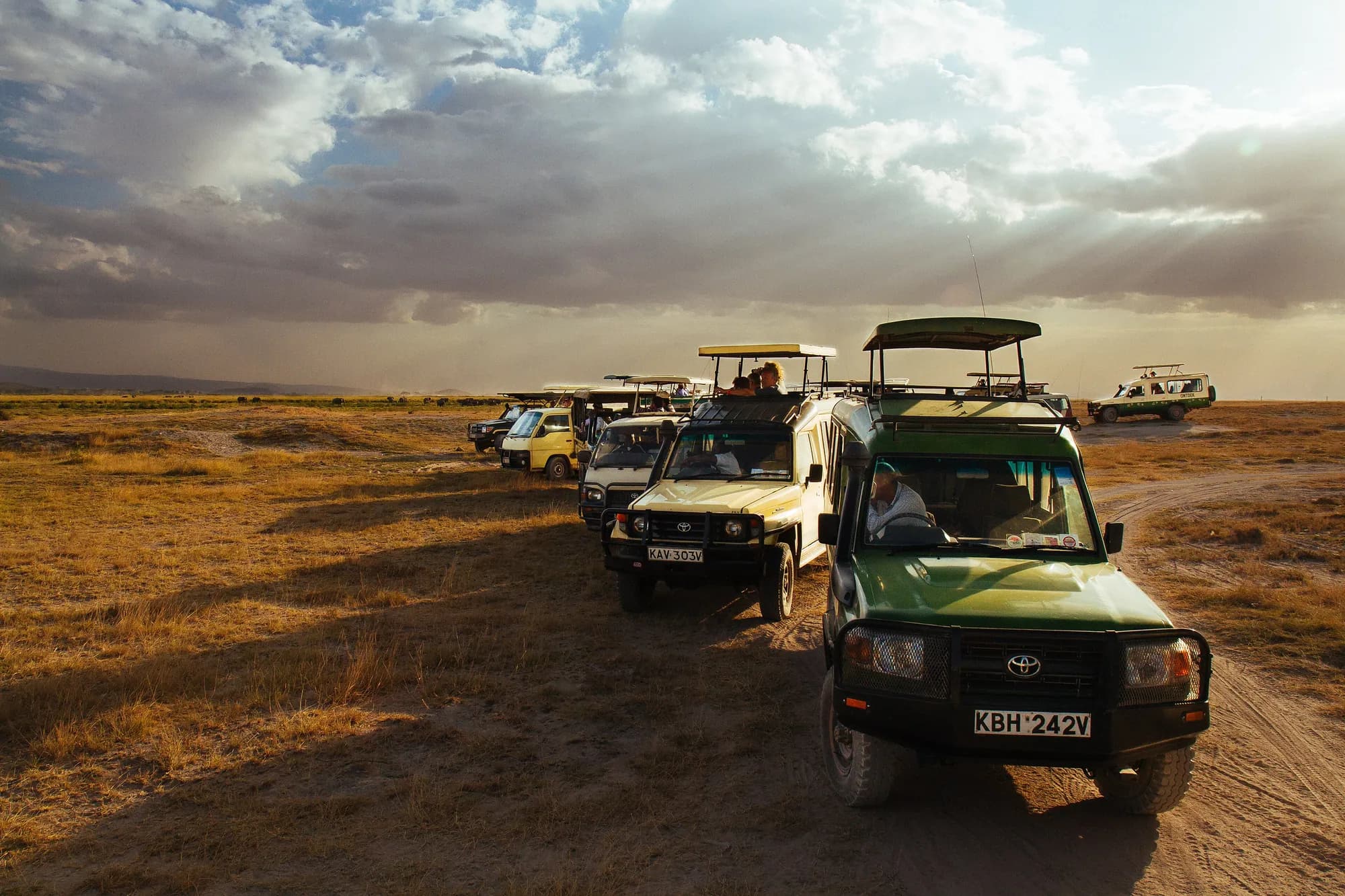
Either a custom safari minivan with a pop-up roof, or a 4×4 Toyota Land Cruiser with a roof hatch. Both have charging points, a cool box and a window seat for every passenger — we never fill the last seat. Land Cruisers cost more and are worth it in the wet season and on rough northern routes.
How much luggage can I bring?
In a road safari, as much as fits — realistically one suitcase and a daypack per person. If your itinerary includes a light-aircraft transfer, the limit is 15 kg per person in a soft bag, and we will tell you in advance.
Is there mobile signal and wifi?
Better than most people expect. Safaricom covers a surprising amount of the Mara, Amboseli and Nakuru. Most lodges have wifi in the public areas, though it is slow. Samburu and parts of the Serengeti are genuinely patchy.
Can children come?
Yes, and they usually love it. A few lodges set a minimum age of six or eight for game drives, and long transfer days are hard on very young children — we will build a gentler route if you tell us their ages.
Is this a private trip or a group departure?
Both are available on most itineraries. A group joining departure shares the vehicle with other travellers and is much cheaper per person; a private trip is your vehicle and your guide, and the itinerary bends around you. On group departures the running order can occasionally be reversed depending on that day's group and which camps have space — the parks and the nights are the same either way.
What are the camping trips actually like?
More comfortable than most people expect. The tents are walk-in and self-contained, with a proper bed, a toilet and a shower inside, and all bedding provided. You do not need to bring a sleeping bag, a mat or a mosquito net. It is not luxury, but nobody is sleeping on the ground.
Do I sleep inside the parks?
On the Mara and Amboseli legs, yes — camps sit on or just outside the reserve boundary. At Naivasha, Nakuru, Baringo, the Aberdares, Mount Kenya and Ol Pejeta, camping itineraries use small hotels in the nearest town rather than a campsite. Lodge itineraries are usually inside the parks.
Why is the Maasai Mara day planned so tightly?
A Mara ticket is valid for twelve hours and there is no re-entry once you leave the reserve, so the day is built around a single entry with a picnic lunch inside rather than driving back out at midday. Re-entry can be bought on a private safari; it is not possible on a group departure.
What should I pack?
Neutral colours, layers (mornings are genuinely cold in an open vehicle), a hat, sunscreen, binoculars, a good camera with more zoom than you think you need, and a torch. Avoid camouflage patterns, which are restricted in both Kenya and Tanzania.
Money and booking
What does a trip cost?
It depends on the season, your party size and whether you want budget camping, mid-range lodges or high-end camps — the same itinerary can differ threefold across those. Send us your dates and we will give you a full costing rather than a misleading 'from' price.
How do I pay?
A deposit confirms the booking and the balance is due before you travel. We accept bank transfer and card, and M-Pesa for smaller amounts within Kenya. Full terms come with your quote.
What is the cancellation policy?
It varies with how close to departure you cancel and what the lodges themselves charge us. We pass on the actual cost rather than adding a margin. The exact schedule is on your booking confirmation.
How much should I tip?
Tipping is customary and always optional. As a guideline, around USD 10–15 per vehicle per day for your driver-guide, and a little for lodge staff via the communal tip box. On a Kilimanjaro trek the crew tip is larger and we will give you a written breakdown before you start.
Can I pay in local currency?
Kenyan shillings work everywhere in Kenya and US dollars are widely accepted for tourism services. Bring dollar notes printed in 2013 or later — older ones are frequently refused.
Still unsure about something?
Ask us. We would rather answer ten questions before you book than have you arrive with the wrong expectations.